
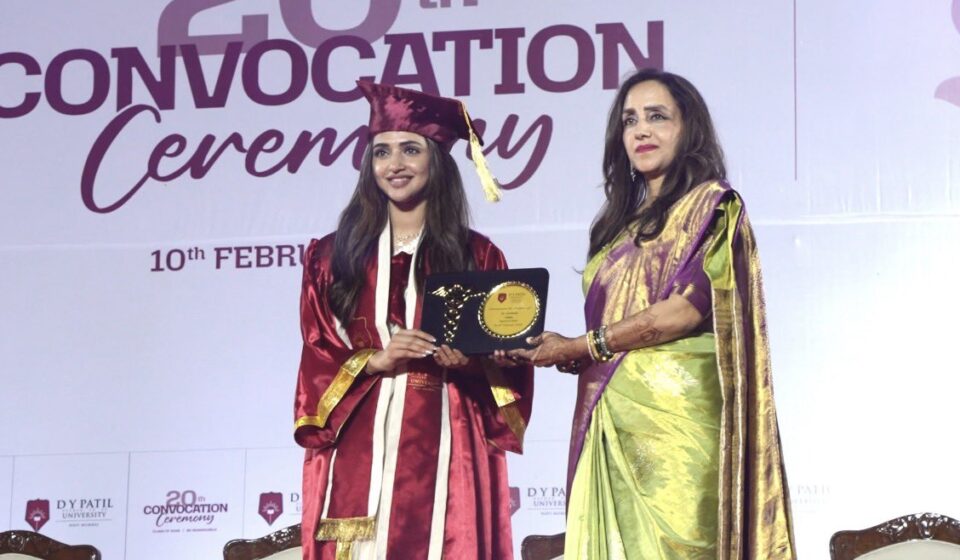

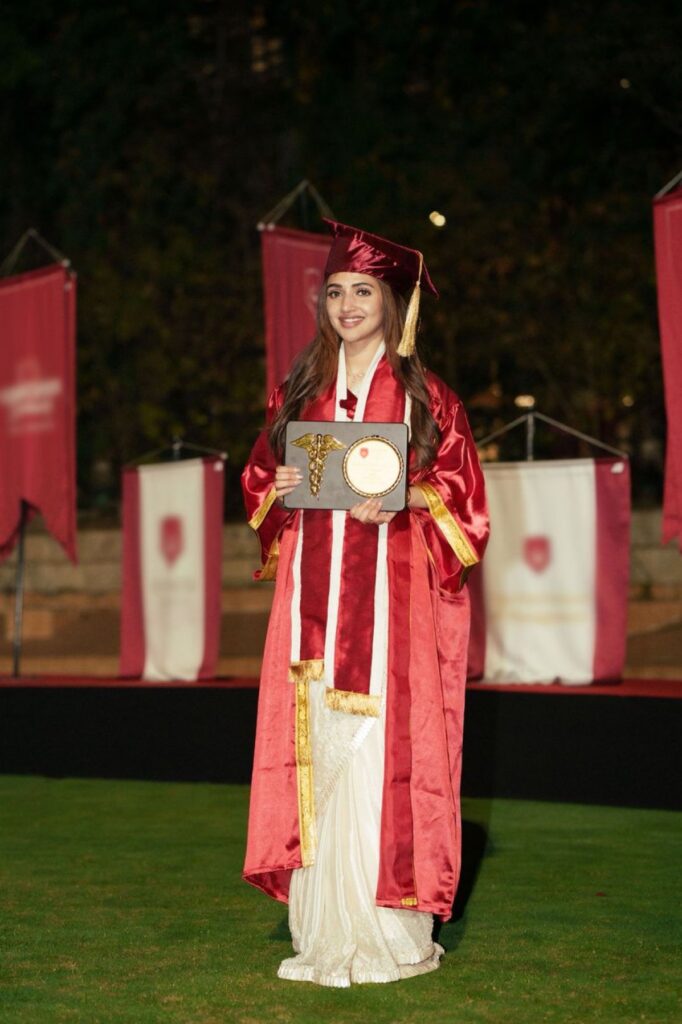
Actress Sreeleela recently completed her MBBS degree from DY Patil University in Mumbai and added “Dr.” to her name, earning praise from fans who called her a “beauty with brains.” However, her graduation has also triggered a major online debate. While many admire her for balancing films and studies, others are questioning how she managed to complete such a demanding course alongside a busy acting career.
An MBBS degree in India requires 4.5 years of academic study followed by a compulsory one-year rotating internship with strict attendance rules and hands-on clinical training. During the same period, Sreeleela acted in multiple films, worked long shooting hours, traveled for promotions, and appeared in major projects. This has led medical students and netizens to question whether it was practically possible to complete mandatory attendance and internship requirements while actively working in cinema.
Since DY Patil is a private deemed university, some critics have alleged that flexibility or special consideration may have been given. Discussions online also point to her privileged background and her mother being a doctor as possible factors that might have helped. However, there is no official evidence proving that any rules were broken, and the claims remain unverified speculation circulating on social media.
The controversy has also brought comparisons with other celebrities. Former Miss World Manushi Chhillar reportedly paused her MBBS in a government college due to strict attendance rules, while actress Sai Pallavi, who studied medicine abroad, had to meet screening requirements to practice in India. These comparisons have intensified discussions about differences between private and government medical institutions.
For many medical students, the concern is about fairness and credibility. MBBS is widely considered one of the toughest degrees, requiring long hospital shifts, direct patient care, and significant personal sacrifice. The larger debate now revolves around whether equal standards are maintained for everyone. Until any official clarification emerges, the discussion remains a mix of admiration, skepticism, and broader questions about privilege in professional education.